Section 232 Auto Tariffs: How the Fifteen Percent Cap Works for Japan, EU and Korean Cars
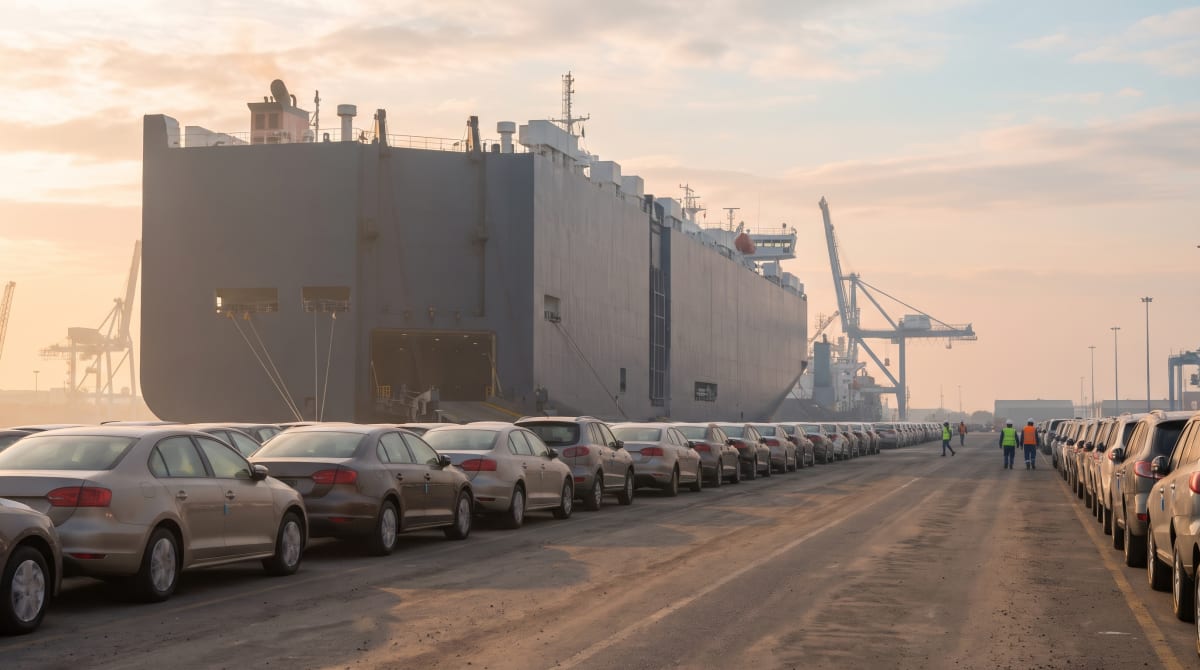
Why some imported cars now pay less than the Section 232 auto duty
Since April 3, 2025, most imported passenger vehicles and light trucks pay an extra twenty-five percent Section 232 duty on top of their normal HTS rate, under heading 9903.94.01. Trade deals with Japan, the European Union and South Korea changed that for their cars. For qualifying vehicles from those three, the total duty is capped at fifteen percent all-in, instead of the base rate plus twenty-five percent.
“All-in” is the key word. The fifteen percent is not added on top of the normal duty. It replaces the combination of the base rate and the Section 232 duty, so the car pays fifteen percent in total for those two layers.
How the fifteen percent all-in cap works
The rules sit in U.S. note 33 to chapter 99 of the HTS, with a pair of headings for each partner:
- Japan (note 33, subdivision k): 9903.94.40 and 9903.94.41
- European Union (note 33, subdivision n): 9903.94.50 and 9903.94.51
- South Korea (note 33, subdivision s): 9903.94.60 and 9903.94.61
The second heading in each pair covers vehicles whose normal column 1 duty is below fifteen percent. For those, the Section 232 layer tops the total up to exactly fifteen percent. The first heading covers vehicles whose normal duty is already fifteen percent or more. For those, no Section 232 duty is added at all, and the vehicle simply pays the duty in its own HTS subheading.
A worked example: a mid-size car from Japan or Germany
Take a gasoline passenger car with an engine between 1,500 and 3,000 cc, classified under HTS 8703.23.01. Its normal column 1 duty is two and a half percent.
From Japan, Germany or France, our data today shows:
- the base rate of two and a half percent,
- a Section 232 layer under 9903.94.41 (Japan) or 9903.94.51 (EU) of twelve and a half percent,
- a total of fifteen percent for those two layers.
The same car from Mexico, or from any country without a cap deal, still gets the full twenty-five percent Section 232 duty under 9903.94.01 on top of the base rate. From China, it also carries the Section 301 duty under 9903.88.01.
Korean cars work a little differently, because a car like this one that qualifies under the US-Korea free trade agreement has a special column 1 rate of free. Under 9903.94.61, the cap applies when either the general or the special column 1 rate is below fifteen percent, and the heading itself carries the fifteen percent. So a Korean car that qualifies for the free trade rate pays fifteen percent all-in for these layers too.
Light trucks: why there is no add-on
Light trucks such as pickups under HTS 8704.21.01 already carry a normal duty of twenty-five percent, well above the cap. They fall under the first heading of each pair (9903.94.40 for Japan, 9903.94.50 for the EU, 9903.94.60 for Korea), so no Section 232 duty is added. For a light truck from Japan or Germany, our data today shows the base rate of twenty-five percent and no Section 232 layer.
One thing to watch: Korean light trucks under 8704.21.01 do not get the free trade agreement’s free rate. The HTS lists twenty-five percent for Korea in the special column, so they stay at their normal duty with no Section 232 add-on.
Electric goods vehicles keep the full Section 232 duty
Not every vehicle in chapter 87 gets a capped rate. For electric goods vehicles under HTS 8704.60.00 from Japan or Germany, our data today shows the normal twenty-five percent duty plus the full twenty-five percent Section 232 duty under 9903.94.01, not one of the capped headings.
If you classify commercial electric vans or trucks, double-check the subheading before you assume a cap applies.

When each cap started
Each cap took effect on its own date, set by a notice in the Federal Register:
- Japan: entries on or after September 16, 2025, under the notice published that day (90 FR 44638).
- European Union: entries on or after August 1, 2025, under a notice published on September 25, 2025 (90 FR 46136).
- South Korea: entries on or after November 1, 2025, under a notice published on December 4, 2025 (90 FR 55964).
The EU and Korea notices were published weeks after their start dates, so the cap reaches back to entries made before the notice appeared. If you entered qualifying vehicles in that gap, talk to your customs broker about whether a correction applies.
How to check a vehicle with TariffsAPI
Pass the HTS code and country of origin to /resolve, and the response lists each layer separately: the base rate, the Section 232 heading that applies, and any other programs. The explanation block shows how the total was built step by step, so you can see whether a cap, a full add-on or no add-on applied, and why.
Vehicle rules keep shifting as new deals are signed, so check the current answer for each shipment rather than relying on a fixed table. See the changelog for every update to our Section 232 coverage.